Biotech for after you buy: Can The Lab change garment care for the better?

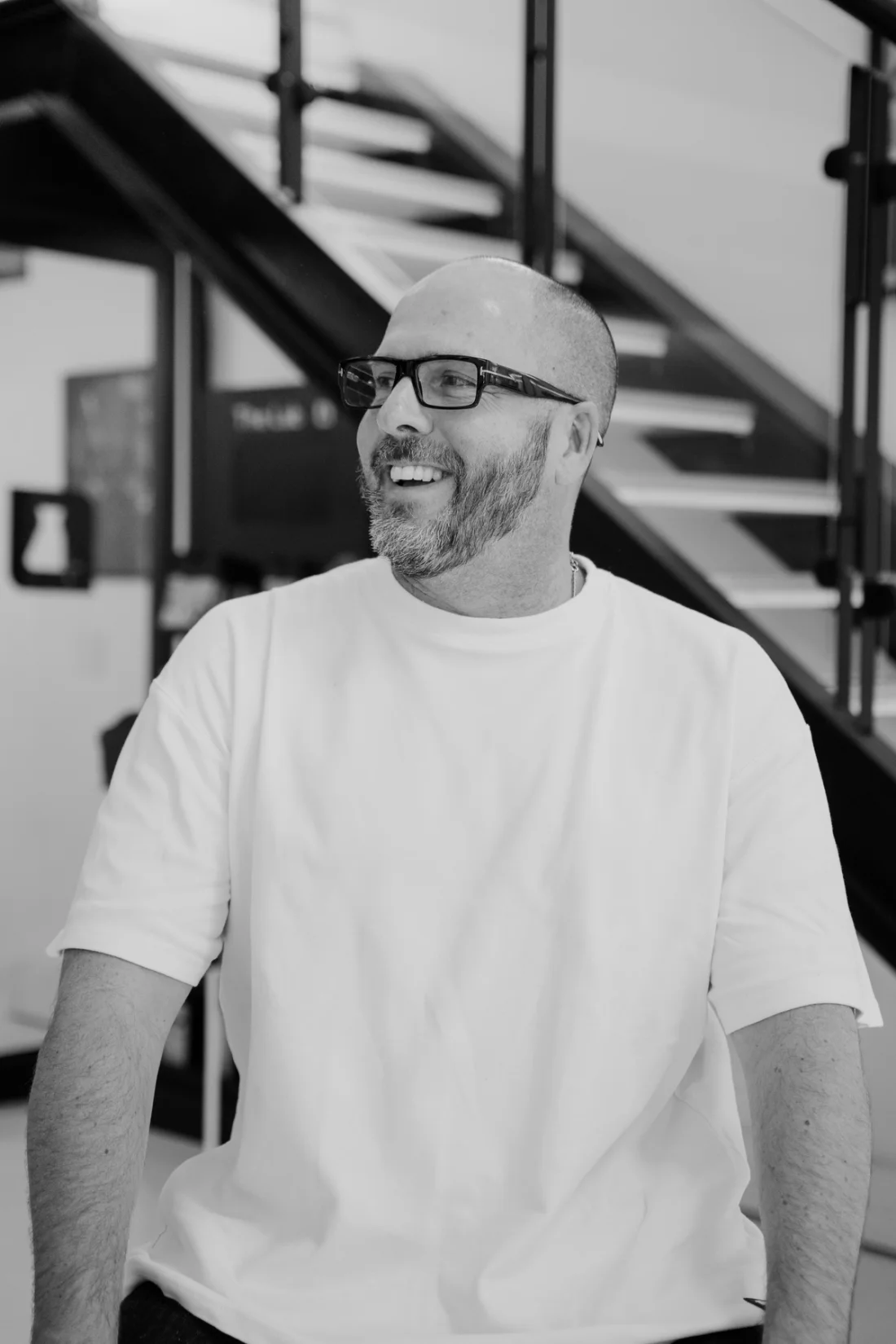
Jo Farah launched biotech shoe and clothing care company The Lab in Cape Town in 2012, originally as Sneaker LAB. He tells BioRunway how probiotics were a breakthrough, why “bio” doesn’t always mean sustainability, and the focus shift he’d like to see for future biofashion developments.
What is your background and what led you to found The Lab?
My background wasn't in biotechnology. I came from entrepreneurship, marketing and streetwear culture, and I had always wanted to build a brand of my own. At the time sneaker culture was growing rapidly, but there was almost no real category around caring for the products people were investing so much money and emotion in.
We started with a simple question: what happens after you buy something you love?
Fourteen years later, that thinking has expanded from sneakers into apparel, denim, headwear and accessories. The bigger idea behind The Lab today is that fashion shouldn't only innovate around how products are created. We also need to innovate around how they are cared for, preserved and kept in use.
What problem were you trying to solve when you started the company, and how clearly did you see the solution at the beginning?
The need was clearer than the solution.
Initially, I could see that sneaker culture was exploding and people were spending more on footwear, but there wasn't a credible premium care category developing alongside it. We knew people would want to look after the things they valued.
What we didn't know was exactly how we were going to solve that problem.
We experimented with more environmentally responsible cleaning formulations, but a lot of what was labelled "green" simply didn't perform well enough. That was a problem for me. I didn't want sustainability to be the compromise.
When we discovered probiotic biotechnology, something clicked. Beneficial microorganisms already perform extraordinary functions in natural ecosystems. We began exploring how we could harness those biological processes to break down dirt and organic matter at a microscopic level.
That changed the direction of the company.
We started thinking less about creating another cleaner and more about using biology to fundamentally rethink care.
“People won't adopt something simply because it is better for the planet. It has to work exceptionally well first.”
How did the people you collaborated with help shape your thinking about biotech, materials, or sustainability?
I've been fortunate to learn from a lot of different people, but much of our thinking has really come from working at the intersection of disciplines.
We have spent years working with microbiologists, formulators, manufacturers, fashion brands, retailers and consumers. Each looks at the same problem differently. A scientist may ask whether the technology works; a fashion brand asks whether it is safe for a particular fabric or finish; and the consumer simply wants to know whether it will get the stain out.
That has shaped our philosophy enormously.
One of the biggest lessons has been that sustainability cannot come at the expense of performance. People won't adopt something simply because it is better for the planet. It has to work exceptionally well first.
Working with global fashion and footwear brands has also given us a very practical view of sustainability. Once you work with products at scale, you realize that the challenge isn't simply inventing something new. It is getting science, manufacturing, cost, logistics, design and consumer behavior to work together.
How do you describe what your material does, or could do, to someone who has never heard the word 'biotechnology' before?
The simplest way I explain it is: instead of relying only on aggressive chemistry to do the cleaning, we use biology to help do the work.
We're slightly different from many companies in the biomaterials space because we don't manufacture a new fiber, fabric or leather alternative.
Our biotechnology interacts with the materials that already exist.
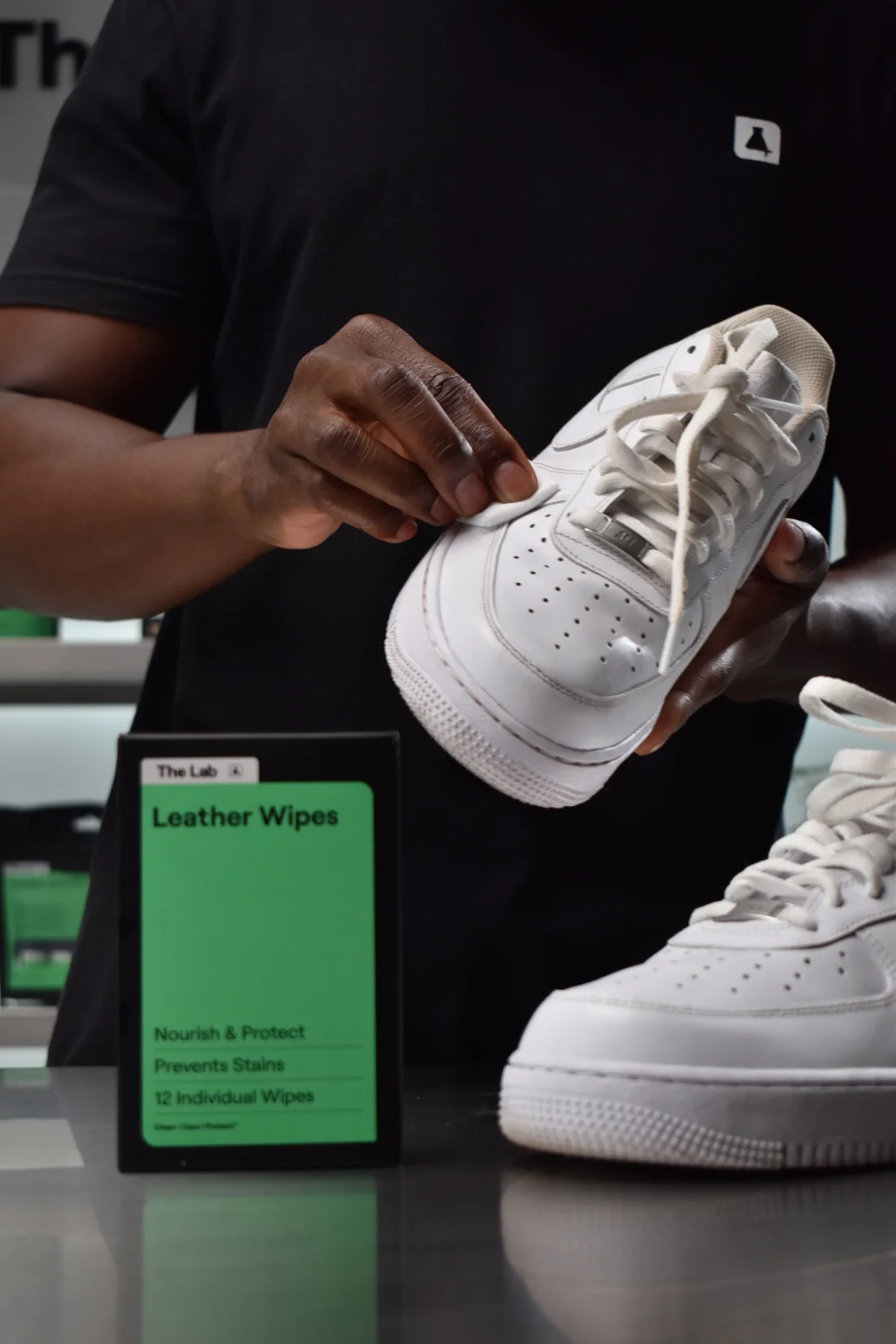
We use beneficial bacteria in our cleaning formulations. They remain dormant until the product is used and then help break down organic dirt at a microscopic level, continuing to work after the initial cleaning process.
That's particularly important in fashion care because cleaning isn't simply about removing dirt. You need to remove dirt while protecting color, fibers, finishes, texture and the integrity of the garment.
So our role in biofashion is slightly different. We're asking how biotechnology can help the materials we already own perform better and remain in use for longer.
“The biggest surprise has been how little attention fashion historically gives to what happens after the sale.”
What has been the hardest thing about bringing a biotech product to market — technically, commercially, or culturally?
There have been challenges on all three fronts.
Technically, fashion care is surprisingly difficult. You're dealing with leather, suede, cotton, synthetics, dyes, glues, coatings and increasingly sophisticated performance fabrics. A product has to clean effectively without damaging any of them.
Then add biotechnology. You're working with a biological system that needs to remain stable through manufacturing, storage, shipping and different environmental conditions and still perform consistently when the consumer uses it.
Commercially, the bigger challenge has been education.
For decades consumers have effectively been taught that bacteria equals bad. We are saying that biology is far more nuanced than that and that beneficial microorganisms can actually perform useful functions for us.
But perhaps the biggest surprise has been how little attention fashion historically gives to what happens after the sale.
The industry spends enormous amounts of money designing, manufacturing and marketing a garment and then hands responsibility for its care almost entirely to the consumer.
To me that's one of fashion's largest remaining blind spots.
"The fashion industry has mastered creation. I don't think it has yet mastered care."
What's next for your company and products? What are you most excited about?
The evolution from Sneaker LAB into The Lab is really the next chapter.
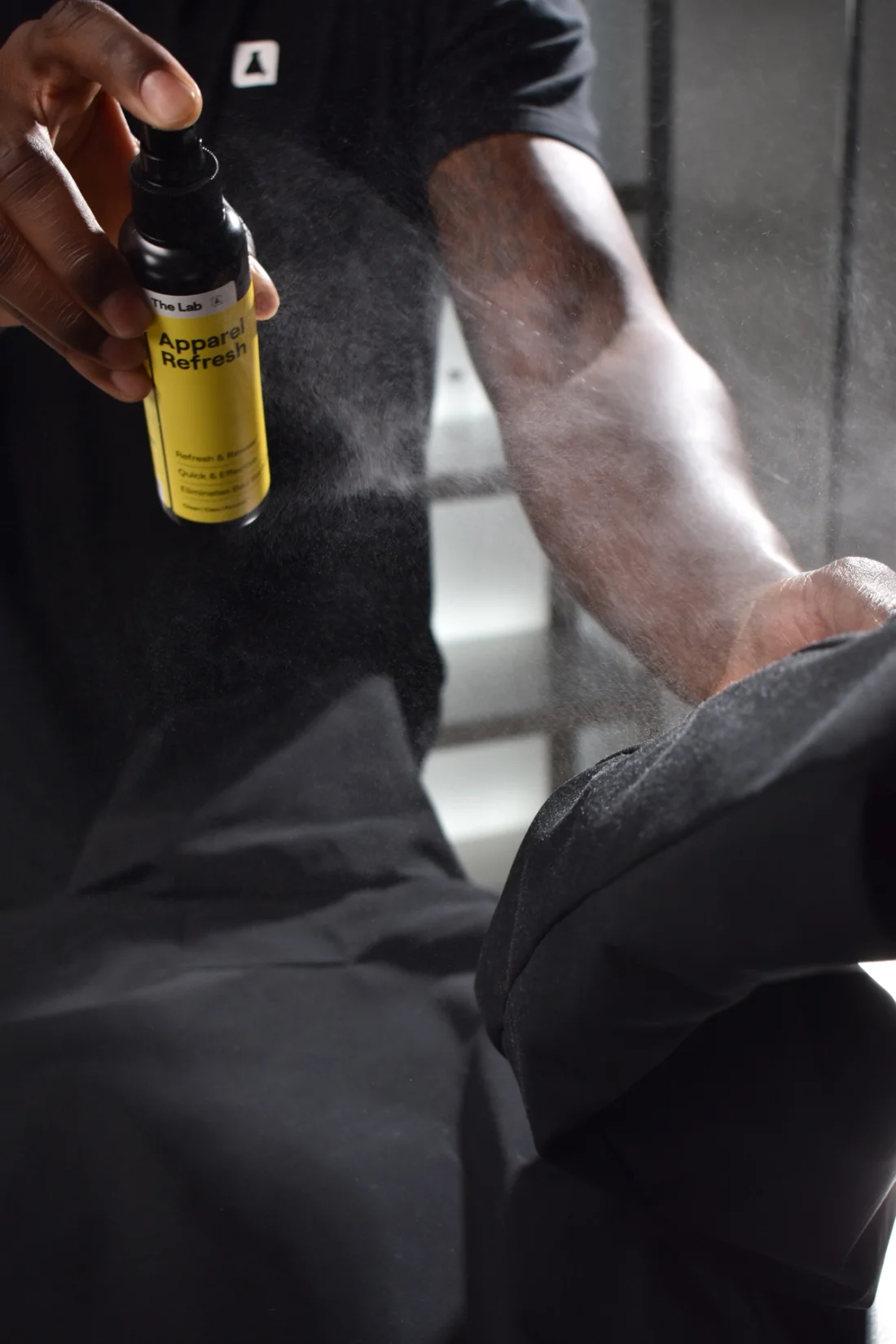
Sneakers were our entry point, but the technology and philosophy were never limited to footwear. We're building a much broader fashion-care platform across sneakers, apparel, denim, headwear and accessories.
What excites me most is the opportunity to make care part of the fashion ecosystem itself.
I can see a future where brands don't simply sell a garment and walk away. Care becomes part of the product architecture — how it is sold, maintained, repaired, resold and ultimately kept in circulation for as long as possible.
We're increasingly working directly with fashion brands to integrate care into that lifecycle rather than treating it as an accessory sold somewhere else in the store.
The fashion industry has mastered creation. I don't think it has yet mastered care.
That's the opportunity we're building around.
Where do you see the biotech in the fashion industry right now and where do you think it needs to go to succeed?
I think we're moving from the age of experimentation into the age of commercial proof.
There is extraordinary science happening across fibers, dyes, materials, fermentation, microbial systems and biotechnology. But ultimately an innovation has to survive outside the laboratory.
Can it perform?
Can it scale?
Can it be manufactured consistently?
Can it work within existing supply chains?
Can someone make money selling it?
And most importantly, does the consumer actually want it?
I also think we need to broaden the sustainability conversation.
For years fashion has concentrated heavily on how a product is manufactured and what it is made from. Those things matter enormously, but they are only part of the lifecycle.
We should also be asking:
How long does the product stay in use? How often does it need to be washed? How much water and energy does its care require? Can it be repaired? Can it be resold? Can its useful life be doubled?
Making an existing garment last significantly longer can be incredibly powerful.
The future isn't going to come from one miracle material or technology. It will come from redesigning the entire system around longevity.
There's both excitement and skepticism around biofashion right now. Where do you think the hype is justified, and where do you think the field still needs to prove itself?
The excitement is justified because biology gives us an extraordinary toolkit.
We're only beginning to understand how microorganisms, enzymes, fermentation and biological processes can be used in industrial applications. I think we're going to see applications across materials, dyes, coatings, cleaning, waste processing and many other areas we haven't even considered yet.
Where I become skeptical is when the word "bio" automatically becomes synonymous with "sustainable."
It doesn't.
A bio-based product still needs to be assessed across its entire lifecycle: where the feedstock comes from, how much water and energy it requires, how durable it is, how it is manufactured, how far it travels and what happens to it at the end of its life.
And commercially, a beautiful prototype or a collaboration with a major fashion house isn't the same thing as proving a viable business.
The real test comes when the technology has to perform repeatedly, at scale, at the right cost.
Biotechnology shouldn't get a free pass because the science is exciting. It should ultimately be held to a higher standard.
If you could change one thing about how biofashion is currently discussed in the media or by investors, what would it be?
I would move the conversation away from "What is this new thing made from?" and toward "What problem does this actually solve?"
There is sometimes a tendency to romanticize the material itself — mushroom leather, algae fibers, bacterial cellulose, fermentation — because those stories are visually and intellectually exciting.
But the biology isn't the outcome. It's the tool.
Investors and the media should be asking how it performs, whether it meaningfully reduces impact, and if it can scale. Will consumers adopt it? Can it build a commercially sustainable business?
I'd also like biofashion to be discussed more broadly than just creating replacements for existing materials.
Some of the biggest opportunities may come from using biology to improve the systems surrounding fashion — dyeing, finishing, cleaning, maintenance, recycling and end-of-life.
We don't necessarily need biology to create more things. We need it to help us create better systems around the things we already have.
More articles

October biotextile round-up: runway cellulose, algae black, and Brewed Protein
Three looks grown from fruit waste, plus a carbon-negative black.

September biotextile round-up: couture, dye, and living textiles
A dress with lab-grown silk, plus dye and living textiles.

July news round-up: Nylon, nylon, BioPuff®
New bionylon collaborations, from waste wood to athleisure, Imperial College London bets on bio, and a biomaterials favorite says goodbye.

Become an insider
Stay in the loop on the latest updates.